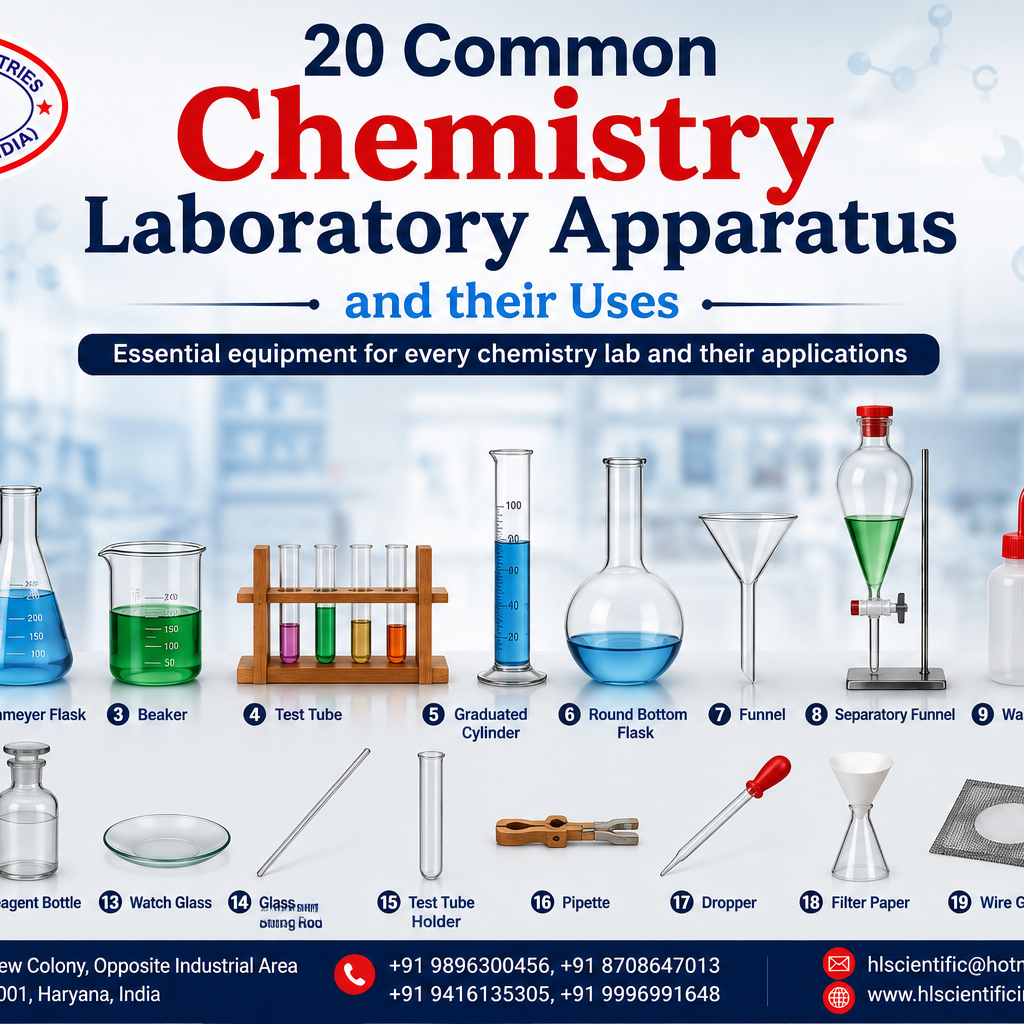
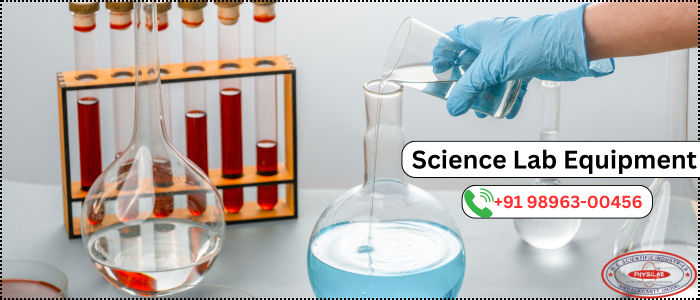
A conical flask, also known as an Erlenmeyer flask, is one of the most iconic and frequently used pieces of laboratory glassware. Characterized by its conical body, flat base, and narrow cylindrical neck, the conical flask is designed to allow easy mixing, safe heating, minimized spillage, and controlled reactions. It plays a vital role across fields such as chemistry, biology, pharmaceuticals, environmental science, and industrial research.
1. Structure and Design Features
The functionality of a conical flask stems from its design:
1.1. Conical Shape
-
The wide bottom and narrow neck reduce splashing during mixing.
-
Allows swirling liquids without using a stirring rod.
-
Provides stability on lab surfaces.
1.2. Narrow Neck
-
Reduces evaporation of volatile substances.
-
Helps control the escape of gases.
-
Can be easily stoppered using rubber or glass stoppers.
1.3. Flat Base
-
Allows the flask to stand upright without support.
-
Ensures uniform heating when placed on hot plates or wire gauze.
1.4. Capacity Markings
-
Graduation marks on the side provide approximate measurement.
-
Not intended for highly precise volume measurements (volumetric flasks are used for that purpose).
2. Types of Conical Flasks
Conical flasks come in several variations designed for specialized laboratory functions.
2.1. Standard Erlenmeyer Flask
-
Most common type.
-
Made of borosilicate glass (e.g., Pyrex).
-
Suitable for heating, mixing, titrations, and general lab use.
2.2. Narrow-Neck and Wide-Neck Flasks
-
Narrow-neck: Ideal for minimizing evaporation and contamination.
-
Wide-neck: Allows easy addition of solids and cleaning.
2.3. Filtering (Büchner) Flask
-
Thicker walls for use under vacuum.
-
Side arm attachment for vacuum filtration.
-
Designed to withstand pressure changes.
2.4. Screw-Cap Conical Flask
-
Has a plastic or metal screw cap.
-
Used in microbiology for culturing bacteria or storing samples.
-
Prevents contamination without needing stoppers.
2.5. Plastic Conical Flasks
-
Made from polypropylene or polycarbonate.
-
Lightweight and impact-resistant.
-
Used for biological processes where glass might break.
2.6. Heavy-Duty Erlenmeyer Flasks
-
Extra reinforced glass.
-
Withstand thermal shock, rapid heating, and harsh chemicals.
3. Materials Used in Conical Flasks
3.1. Borosilicate Glass
-
Most common.
-
Resistant to heat shock and chemicals.
-
Suitable for heating and cooling cycles.
3.2. Polypropylene (PP) or Polycarbonate (PC)
-
Used in biological labs.
-
Autoclavable and shatterproof.
-
Not suitable for high-temperature heating on open flames.
3.3. Soda-Lime Glass
-
Less expensive, but less resistant to heat.
-
Used for general-purpose mixing, not heating.
4. Uses of Conical Flasks
The conical flask’s versatility makes it indispensable in many laboratory operations.
4.1. Mixing and Agitation
-
Swirling solutions without spillage.
-
Ideal for mixing reagents, chemicals, and buffer solutions.
4.2. Heating Solutions
-
Can be placed on hot plates or heated over a Bunsen burner (if borosilicate).
-
Uniform heating due to wide base.
4.3. Titration Procedures
-
Widely used to hold analytes during titration.
-
The shape prevents splashes during swirling.
4.4. Sample Culturing
-
Screw-cap or cotton-plug flasks used for microbial culture growth.
-
Allows gas exchange while minimizing contamination.
4.5. Temporary Storage of Solutions
-
Solutions, extracts, and reaction mixtures can be stored.
-
Easy sealing with rubber or glass stoppers.
4.6. Crystallization
-
Some solutions can be cooled in conical flasks to allow crystallization.
-
Neck prevents crystal loss while pouring.
4.7. Filtration (with Büchner Flask)
-
Vacuum filtration of precipitates.
-
Efficient separation of solids from liquids.
5. Laboratory Applications in Different Fields
5.1. Chemistry
-
Used in acid-base titrations.
-
Heating chemicals and performing reactions.
-
Preparing solutions and reagents.
-
Mixing during synthesis and precipitation reactions.
5.2. Biology and Microbiology
-
Growing bacterial or fungal cultures.
-
Preparing culture media and buffer solutions.
-
Storing biological samples.
5.3. Environmental Science
-
Sample collection for water and soil testing.
-
Performing chemical analysis of pollutants.
5.4. Pharmaceutical Laboratories
-
Quality testing of medicines.
-
Preparing formulations and solutions.
-
Conducting microbiological testing.
5.5. Education and Teaching Laboratories
-
Fundamental equipment for school and college chemistry labs.
-
Demonstrations of reactions and experiments.
6. Advantages of Conical Flasks
-
Easy to swirl without spilling.
-
Compatible with heating and cooling.
-
Versatile for multiple lab procedures.
-
Narrow neck reduces evaporation and contamination.
-
Stable base prevents tipping.
-
Compatible with stoppers and caps.
7. Limitations
-
Not suitable for highly accurate volume measurements.
-
Wide base may make storage space-consuming.
-
Glass flasks can break if mishandled.
-
Plastic versions may degrade with strong solvents or high temperatures.
8. Safety Tips for Using Conical Flasks
-
Avoid sudden temperature changes with glass flasks.
-
Always check for cracks before heating.
-
Use appropriate clamps when heating or during filtration.
-
Do not stopper a flask tightly if heating (risk of pressure build-up).
-
Handle with heat-resistant gloves when hot.
Conclusion
The conical flask is an essential and multipurpose piece of laboratory equipment, valued for its durability, safety, versatility, and ease of use. Whether in educational environments, industrial processes, or advanced research, its unique design and functionality make it indispensable for mixing, heating, culturing, and analyzing chemical and biological samples. Understanding the different types and applications of conical flasks helps ensure efficient and safe laboratory work.