Top 100 Laboratory Equipment and Their Uses

H.L. Scientific Industries
-
-
Founded in 1963, based in Ambala Cantt, Haryana, India.
-
We are specialize in manufacturing and exporting scientific laboratory instruments, educational models, and lab-testing / measuring equipment.
-
ISO 9001:2008 certified, and also has CE and GMP certifications.
-
-
Leadership & Structure:
-
It seems to be a proprietorship firm.
-
Key persons include Dheeraj Goswami and Yogesh Goswami.
-
The firm has relatively small headcount (their website suggests “up to 10” employees) but has a global export reach.
-
Annual turnover is estimated between ₹1.5 to 5 crore (according to their about-page).
-
-
Products / Offerings:
H.L. Scientific has a very broad and diverse product portfolio:-
Physics / Engineering Lab Equipment – Optical benches, Michelson Interferometers, electromagnetic kits, resonance apparatus, etc.
-
Civil Engineering Instruments – Laboratory ovens, environmental chambers, civil lab setups.
-
General Laboratory Equipment – Centrifuges, ovens, laminar flow cabinets, water stills, etc.
-
Pharmacy / Clinical Instruments – Tablet filling machines, incubators, clinical lab instruments.
-
Educational / Training Models – Models used in schools, colleges, technical education (TVET) labs.
-
Research Instruments – Such as interferometers, spectrometers, for research labs.
-
Laboratory Accessories – Refrigerators, humidity cabinets, metrology / meteorological instruments, etc.
-
Forensic & Biological Models – Anatomical / forensic models for teaching.
-
-
Quality & Export:
-
Around 80% of their products are exported internationally.
-
They have stringent quality control: dedicated QC team, inspection at multiple stages, adherence to international manufacturing norms.
-
Also provide customized / tailor-made instruments as per client specs.
-
-
Target Customers / Clients:
-
Educational Institutions: schools, colleges, universities.
-
Research Organizations & Labs.
-
Industrial R&D / Testing Labs.
-
TVET (Technical & Vocational Education and Training) institutes.
-
Medical / Pharmacy Colleges.
-
-
Location & Contact:
-
Registered / Head office: #57 New Colony, Industrial Area, Ambala Cantt – 133001, Haryana, India.
-
Phone: +91-98963-00456, +91-87086-47013, +91-94161-35305, +91-99969-91448
-
Email: hlscientific@hotmail.com
-
100 Laboratory Equipment List
1–20: Basic Glassware
-
Beaker – Holds, mixes, and heats liquids; used for reactions, dissolving solutes, and rough volume measurements.
-
Erlenmeyer Flask (Conical Flask) – Mixing by swirling without spilling; ideal for titrations and microbial culture incubation.
-
Volumetric Flask – Used for preparing solutions of precise volumes (high accuracy).
-
Graduated Cylinder – Measures liquid volumes more accurately than beakers.
-
Test Tube – Holds small samples for reactions, heating, or centrifuging.
-
Test Tube Rack – Stores and organizes test tubes during experiments.
-
Test Tube Holder – Handles hot test tubes safely.
-
Pipette (Volumetric) – Delivers a single, very precise volume of liquid.
-
Micropipette – Transfers microliter-scale volumes in molecular and microbiology labs.
-
Pipette Bulb/Filler – Helps draw liquid into pipettes safely.
-
Burette – Delivers precise volumes, mainly used in titrations.
-
Glass Funnel – Transfers liquids and filtrations using filter paper.
-
Separatory Funnel – Separates immiscible liquids (organic vs aqueous layers).
-
Watch Glass – Evaporates liquids, holds small samples, covers beakers.
-
Petri Dish – Cultures microorganisms, seeds, or small organisms.
-
Reagent Bottle – Stores chemical reagents safely.
-
Round-Bottom Flask – Used for heating, boiling, refluxing in organic chemistry due to uniform heating.
-
Droppers / Pasteur Pipettes – Transfers small drops of liquids.
-
Stirring Rod – Mixes solutions manually.
-
Desiccator – Stores moisture-sensitive samples in a dry environment.
21–40: Heating, Cooling, and Reaction Equipment
-
Bunsen Burner – Provides flame for heating chemicals and sterilizing equipment.
-
Hot Plate – Heats substances without open flame; safer for flammable chemicals.
-
Magnetic Stirrer with Hot Plate – Heats and stirs simultaneously using a magnetic bar.
-
Heating Mantle – Safely heats round-bottom flasks uniformly.
-
Water Bath – Heats samples gently and uniformly at controlled temperatures.
-
Oil Bath – Allows higher-temperature heating compared to water baths.
-
Dry Bath (Block Heater) – Heats tubes using metallic block wells.
-
Autoclave – Sterilizes equipment using high-pressure steam.
-
Incubator – Controls temperature for microbial and cell culture growth.
-
Refrigerator (Lab Grade) – Stores samples, chemicals at 2–8 °C.
-
Freezer (-20°C) – Preserves biological samples, reagents.
-
Ultra-Low Freezer (-80°C) – Stores DNA, RNA, enzymes, cell lines long term.
-
Cryogenic Freezer (Liquid Nitrogen) – Preserves cells at –196°C.
-
Furnace / Muffle Furnace – High-temperature heating for ashing, material testing.
-
Reflux Condenser – Allows continuous boiling and cooling of vapors to avoid loss of solvent.
-
Distillation Apparatus – Separates liquids based on boiling points.
-
Cold Trap – Protects vacuum systems by condensing vapors.
-
Ice Maker / Ice Bath – Provides cooling for reactions requiring low temperatures.
-
Laminar Flow Hood – Maintains sterile environment for microbiology and cell culture.
-
Fume Hood – Protects users from toxic fumes and chemicals.
41–60: Measuring and Analytical Instruments
-
pH Meter – Measures acidity/alkalinity of solutions accurately.
-
Conductivity Meter – Measures ion concentration via electrical conductivity.
-
Spectrophotometer (UV-Vis) – Measures absorbance to quantify chemicals and biomolecules.
-
Fluorometer – Measures fluorescence for sensitive detection (DNA, proteins).
-
Gas Chromatograph (GC) – Separates and analyzes volatile compounds.
-
HPLC (High-Performance Liquid Chromatograph) – Separates and purifies complex mixtures.
-
Mass Spectrometer – Analyzes molecular mass and structure.
-
Balance (Analytical) – Measures very precise mass (0.0001 g accuracy).
-
Top-Loading Balance – General-purpose mass measurement.
-
Thermometer / Digital Probe – Measures temperature in reactions.
-
Barometer – Measures atmospheric pressure for environmental studies.
-
Hygrometer – Measures humidity in labs or chambers.
-
Colorimeter – Measures intensity of color in solutions for concentration analysis.
-
Refractometer – Determines refractive index to identify substances or concentration (e.g., sugar).
-
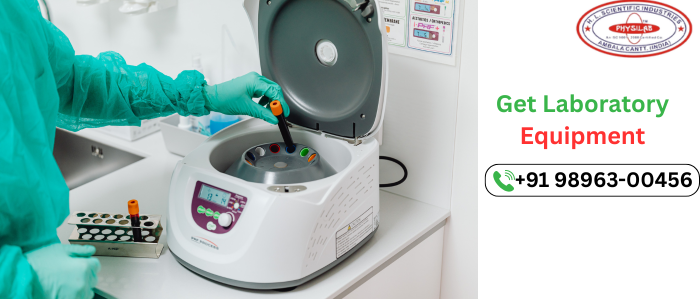
Centrifuge – Separates solids from liquids at high rotational speeds.
-
Ultracentrifuge – Separates subcellular components, viruses, proteins.
-
Hemocytometer – Counts cells under a microscope.
-
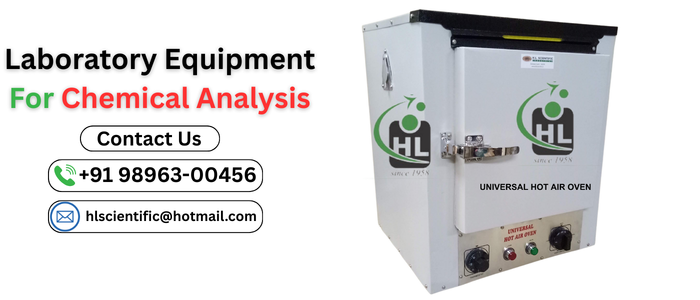
Oven (Drying Oven) – Removes moisture from samples.
-
Vacuum Oven – Dries heat-sensitive samples without oxidation.
-
Pressure Gauge – Monitors pressure in reactors and gas lines.
61–80: Microbiology, Molecular Biology & Medical Laboratory Tools
-
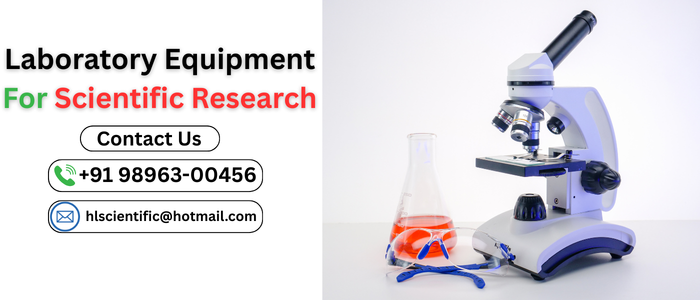
Microscope (Compound) – Views cells, bacteria, and microscopic structures.
-
Stereo Microscope – For dissection and viewing larger specimens.
-
Electron Microscope – High-resolution imaging of ultrastructures (viruses, organelles).
-
Slides and Cover Slips – Hold samples for microscopic examination.
-
Staining Rack – Holds slides during staining procedures.
-
Inoculating Loop / Needle – Transfers microorganisms in microbiology.
-
Autoclavable Loop – Reusable sterilizable version for culturing.
-
Anaerobic Jar – Creates oxygen-free conditions for anaerobic bacteria.
-
Colony Counter – Counts colonies on Petri dishes.
-
PCR Machine (Thermocycler) – Amplifies DNA using temperature cycles.
-
Gel Electrophoresis Apparatus – Separates DNA, RNA, and proteins by size.
-
UV Transilluminator – Visualizes nucleic acids stained in gels.
-
Blotting Apparatus (Western / Southern / Northern) – Transfers biomolecules onto membranes for analysis.
-
Microtome – Cuts thin tissue sections for microscopy.
-
Cryostat – Cuts frozen tissue sections.
-
ELISA Reader (Microplate Reader) – Quantifies biomolecules via colorimetric assays.
-
CO₂ Incubator – Maintains specific CO₂ levels for mammalian cell culture.
-
Shaking Incubator – Grows cultures with constant shaking for aeration.
-
Bioreactor / Fermenter – Grows microorganisms or cells under controlled conditions.
-
Hemoglobinometer – Measures hemoglobin concentration in blood.
81–100: Safety Gear, Support Tools & Miscellaneous Equipment
-
PPE (Lab Coat, Gloves, Goggles) – Protects users from chemicals and hazards.
-
Safety Shower – Decontaminates users exposed to chemicals.
-
Eye Wash Station – Flushes eyes in case of chemical exposure.
-
Fire Extinguisher – Controls small fires in lab environment.
-
First Aid Kit – For minor lab injuries.
-
Chemical Spill Kit – Neutralizes and absorbs chemical spills.
-
Centrifuge Tubes – Holds samples during centrifugation.
-
Microcentrifuge Tubes (Eppendorf Tubes) – Used for molecular biology sample preparation.
-
Cryovials – Store samples at ultra-low temperatures.
-
Parafilm – Seals containers and prevents contamination.
-
Lab Marker – Labels tubes and containers permanently.
-
Weighing Boats / Paper – Holds samples during mass measurement.
-
Mortar and Pestle – Grinds solid samples into powder.
-
Spatula / Scoopula – Transfers solid chemicals.
-
Forceps / Tweezers – Handle small objects or delicate materials.
-
Clamp and Stand (Retort Stand) – Holds apparatus like flasks, burettes.
-
Ring Clamp / Utility Clamp – Supports funnels, glassware during heating.
-
Wire Gauze – Distributes heat evenly under flasks/beakers.
-
Filter Paper – Used for filtration of suspensions.
-
Lab Timer / Stopwatch – Measures reaction or incubation times accurately.