
Common Laboratory Equipment:
Laboratories—whether in schools, universities, research centers, or industries—rely on a core set of tools that make scientific investigation possible. While specialized labs may require advanced instruments, several pieces of equipment are universally recognized as essential for measurement, preparation, heating, analysis, and safety.
1. Glassware Essentials
Glassware is foundational in nearly all scientific labs.
Beakers
Used for mixing, heating, and roughly measuring liquids. Their wide mouth makes them ideal for stirring and transferring substances.
Flasks
-
Erlenmeyer flasks: Prevent splashing and are excellent for titrations.
-
Volumetric flasks: Used for preparing precise solution concentrations.
Test Tubes
Suitable for small-scale reactions, heating samples, or organizing multiple experiments simultaneously.
2. Measurement Instruments
Graduated Cylinders
Provide more accurate volume measurements than beakers. Common in chemistry and biology labs.
Balances
-
Analytical balances: Highly sensitive; measure mass to the milligram or microgram.
-
Top-loading balances: Faster and used for less delicate measurements.
Thermometers
Used to monitor reaction temperatures, often digital or mercury-based (where permitted).
3. Heating and Cooling Equipment
Bunsen Burners
A classic tool for heating chemicals, sterilizing equipment, and performing flame tests.
Hot Plates & Magnetic Stirrers
Modern replacements for Bunsen burners when controlled heating is required. Magnetic stirrers allow simultaneous heating and mixing.
Water Baths
Maintain precise temperatures for biological samples or chemical reactions.
4. Safety Equipment
Goggles & Lab Coats
Essential for personal protection from spills, splashes, and debris.
Fume Hoods
Remove hazardous fumes and gases, keeping the working environment safe.
Fire Extinguishers & First-Aid Kits
Mandatory safety tools in every functioning laboratory.
5. Optical & Analytical Instruments
Microscopes
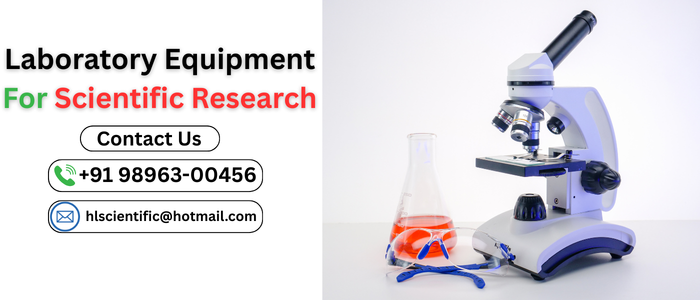
Common in biology, medical, and material science labs. They range from simple compound microscopes to advanced fluorescence models.
pH Meters
Used to measure acidity or alkalinity with high precision.
Spectrophotometers
Measure how much light a substance absorbs—useful for concentration analysis in chemistry and biochemistry.
H.L. Scientific Industries: Contribution to Common Lab Equipment
H.L. Scientific Industries is known as a manufacturer and supplier of educational and laboratory instruments used in academic, research, and industrial settings. Their product range typically includes:
-
Basic glassware (beakers, flasks, cylinders)
-
Microscopes for educational and laboratory use
-
Physics and biology teaching models
-
Balances and measurement devices
-
Laboratory heating equipment such as hot plates and Bunsen burners
-
Safety and demonstration tools for classroom laboratories
The company is frequently noted for producing durable, cost-effective equipment suitable for schools, colleges, and training labs. Their emphasis on reliability and accessibility has made them a popular name in institutions that require standardized teaching equipment.
Conclusion
Understanding the most common laboratory equipment is essential for anyone entering the scientific field. These universal tools form the backbone of experimentation, learning, and discovery. Manufacturers such as H.L. Scientific Industries help ensure these essentials are widely available, especially in educational environments where hands-on learning is vital.